Creative Interactive game · master's thesis

Lotus Baby

An interactive animation game about two generations under China's one-child policy, where the player is handed a single task: build a "perfect child."

Role
Solo project · master's thesis (ITP, NYU)
Tools
Eko Studio · JavaScript · Photoshop · After Effects · Premiere
Key words
Identity · China · one-child policy · generation gap

Overview

Lotus Baby is an interactive animation game, built in Eko Studio with JavaScript.

It's about the gap between two generations: parents born in the 1960s and their children in the 1990s, set inside China's recent history. The player is handed a single goal: answer ten questions, across ten everyday scenarios, and build a "PERFECT CHILD." The choices, and the discomfort they stir up, are the point.

Lotus Baby: two-minute documentation of the interactive game.

Where the name comes from

An illustration of Nezha, reborn standing atop a pink lotus
Nezha, remade from the lotus.

Every Chinese child grows up with the legend of Nezha. But I never read it this way until, as a teenager, I came across this passage by the essayist Hu Lancheng (胡兰成), writing about the novelist Eileen Chang (张爱玲) and her relationship with her parents.

"Nezha was a small child who churned up the rivers and seas and brought down great trouble. Afraid of the fallout, his father invoked the debt of having given him life, and set out to punish him. In his fury, Nezha carved off his flesh to return to his mother and stripped his bones to return to his father. In the end, Guanyin Bodhisattva remade his body from a lotus leaf and a lotus root, and gave him life a second time."

哪吒是个小小孩童,翻江搅海闯了大祸,他父亲怕连累,挟生身之恩要责罚他,哪吒一怒,剜肉还母,剔骨还父,后来是观世音菩萨用荷叶与藕做成他的肢体。

Hu Lancheng · 胡兰成 (English translation mine)

What caught me was one idea buried inside it: 挟生身之恩, a parent leveraging the debt of having given life. Nezha's answer is to give the body back and be remade, this time on his own terms. That is the question the whole game circles.

The ground I grew up on

My parents were born in the 1960s, into a century that kept rewriting itself.

1959–1961

The Great Famine

An estimated tens of millions died of starvation (historians' figures range from roughly 15 to 55 million).

1966–1976

The Cultural Revolution

A decade that gutted the education system, much of the country's cultural heritage, and its shared moral footing.

1978

Reform and Opening-Up

The first real chance in a generation to change the course of a life.

1981–2015

The One-Child Policy

Couples signed away the right to a second child. Those who didn't faced heavy fines, or a forced abortion.

My father always wanted a boy. He was ashamed to tell my grandmother I was a girl. But they could only have me.

And I am not a satisfactory child.

A debt, or a relationship

羊跪乳,鸦反哺。人之情,孝父母。

"The lamb kneels to nurse; the raven feeds its parents in turn. So too should people honor their mother and father."

In the old moral order, a child is born already in debt, and the only way to settle it is filial piety. I don't believe in that. I think parents and children should love and respect each other, as equals.

Two years ago my father told me he feels like part of an abandoned generation: dutiful to his own parents, but never repaid the same way by me. I was born in 1992, into far more choice and entirely new ways of thinking, and that gap is what the game is really about.

Since January 1, 2016, Chinese couples may legally have more than one child; the birth rate stayed low. In August 2018 the government floated penalties for families with fewer than two children. To many, it felt like being told how to live.

Research

To get past my own story, I looked at the generation's.

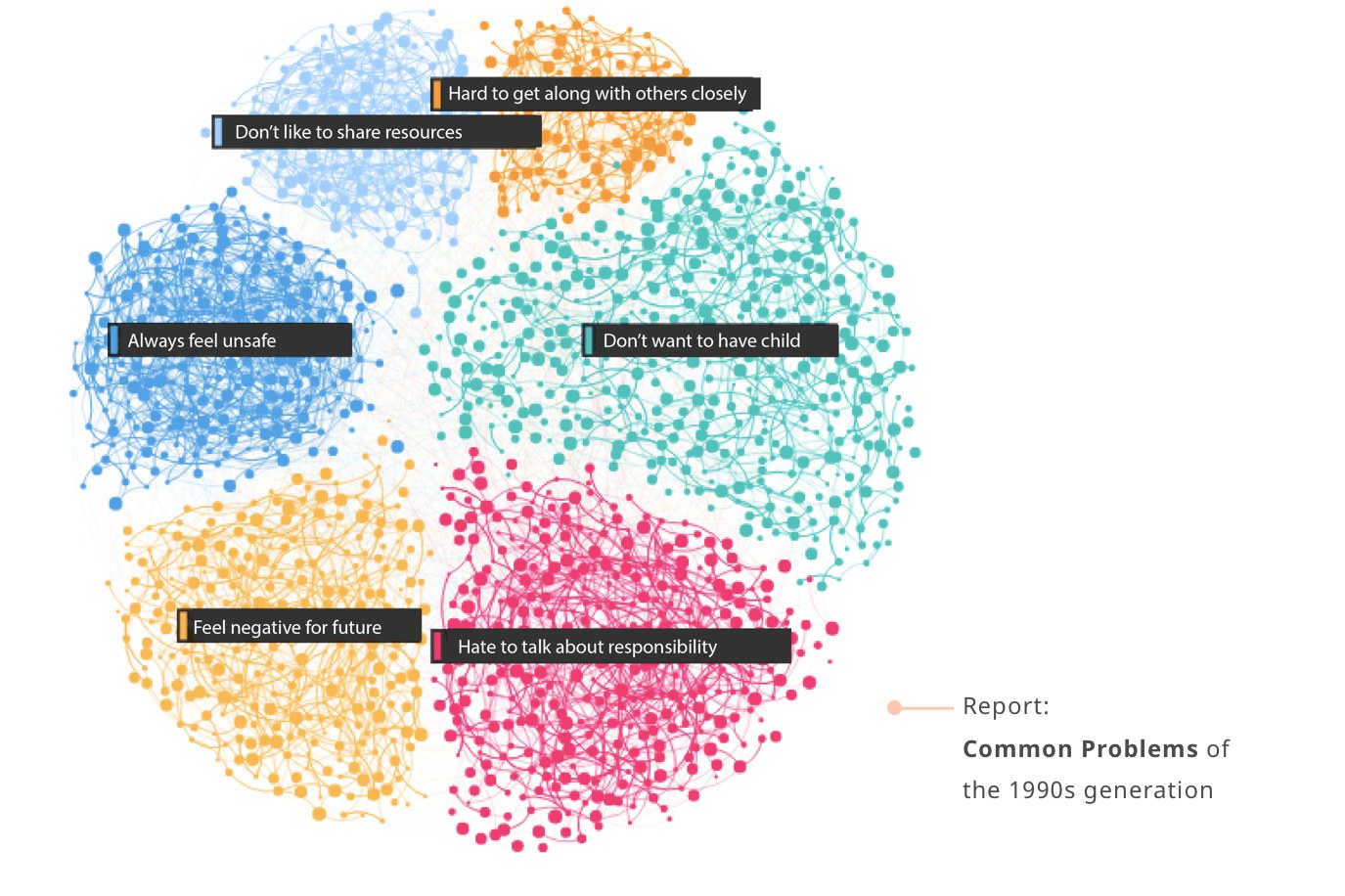
A report on China's 1990s-born mapped a familiar cluster of feelings: hard to get close to anyone, reluctant to share, perpetually unsafe, unwilling to have children, pessimistic about the future, and deeply uncomfortable with responsibility.

A cluster network visualization of the common problems reported by China's 1990s generation
A network of the generation's most-reported struggles.

A "perfect child", as parents picture one

The brief the game quietly hands every player. Stated plainly, because that is what makes it sting.

Clean

Keeps their room spotless.

Loves to share

Hides nothing from their parents: diaries, texts, and messages all open to inspection.

Innocent

Never sets foot in a bar. Lives in the library.

Frugal

Spends carefully, dresses plainly, and never looks the least bit sexually attractive.

Hardworking

Brilliant and diligent. Bound for Tsinghua, Peking, Harvard, or Yale.

A tidy social life

Never dates through college, then somehow marries someone rich and well-educated by 25.

Who it's for

Lily

"I feel like I owe my parents a lot. I don't want a child of my own. I hope to live differently."

Age · 25
Family · only child
Status · international student
Relationship · single
Location · New York City
Character · outgoing, independent

Goals

  • Find her own values and her own pace.
  • Stop being anyone's attachment.
  • See her parents healthy and happy.
  • Actually understand her parents, and be understood.

Frustrations

  • Her parents don't understand her.
  • Everyone worries because she is still single.
  • As the only child, she carries all of the responsibility.

Bio

A millennial only child of parents born in the 1960s, Lily has lived with a severe generation gap her whole life, and doesn't want children of her own. She keeps wondering whether her family could ever really understand one another.

What it feels like

Three accounts from a viral Zhihu thread, "What did your parents hurt you with the most?" (lightly edited for length).

01 · The love letter

In primary school I fell for a boy and wrote him a letter. I kept it in my drawer; my father found it and read it aloud to the whole family. I cried under the quilt, and my mother pulled it back to watch me, smiling. They still bring that boy up, years later. It still makes my skin crawl.

02 · The illusion of choice

Another describes a childhood of choices that were never really choices:

MomDo you want to see the monkeys or the tigers?
MeThe monkeys.

She takes me to see the tigers.

MomApple juice or orange juice?
MeOrange juice.

She hands me the apple juice.

Every choice already had a right answer, so I stopped choosing. Years later, a girlfriend asked me: "Why are you so boring?"

03 · The rabbits

When I was six, my cousin brought me two rabbits. I loved them like best friends. Then my mother decided her sister had a better place for them and made me give them away. For half a year I kept asking how they were; she never answered.

One day we visited my aunt's house and I asked my five-year-old nephew where the rabbits were. "We ate them," he said. "Both." I didn't cry and I didn't argue. It was a hot summer day; I just went very quiet, and couldn't stop the tears.

My best friends are eaten.

A reference: Traveling Frog

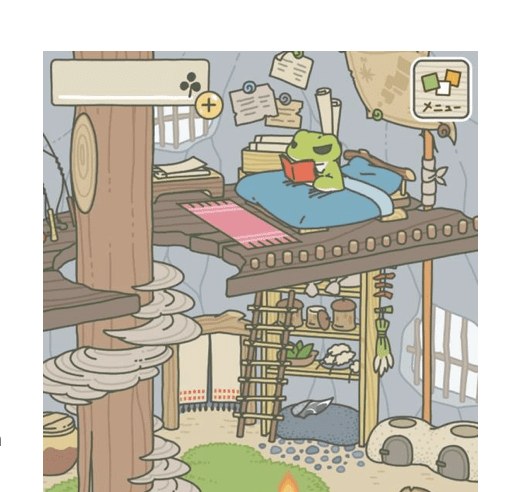
The form came from an unlikely place: Traveling Frog, the game that topped China's App Store in early 2018. You can't really play it. You pack the frog's bag, prepare its food, and wait, never knowing where it has gone or when it will come back.

That waiting is the game, and it is exactly what a parent does. (Japan reportedly used it to nudge would-be parents toward having children.) Lotus Baby borrows that restraint: a game made almost entirely of small choices and the consequences that follow them.

A screenshot of the mobile game Traveling Frog, showing the frog reading at home in its mossy treehouse
Traveling Frog (Hit-Point, 2017), shown here as a reference.

Design & iteration

The game went through three prototypes; each one taught me what the last got wrong.

1

From questions to situations

The first build asked players things like "Would you respect your child's privacy?" Everyone said yes. So I stopped asking and started staging: "Your child is hiding something from you…" Suddenly, most players chose to read the diary without permission. What people did, not what they said, was the truth I was after.

2

From a god's view to the parent's

I narrowed the scope. Instead of a detached, all-seeing frame, the player sits squarely in the parents' point of view, making the choices and feeling the weight of them.

3

Refining the interface

The third pass reworked the layout and the buttons, adding interaction and hover feedback so every choice felt deliberate rather than incidental.

The thesis talk

ITP Thesis Week 2018: presenting Lotus Baby (≈ 11 min).